
Our coffee processing steps
At Trakem, we pride ourselves on delivering the finest Ethiopian coffee by following a meticulous process that ensures premium quality from farm to cup. Below are the key steps involved in processing our coffee beans:

01
Sorting: Ensuring Premium Quality
After the coffee cherries are handpicked from Ethiopia’s lush coffee farms, they undergo a thorough sorting process. This step involves removing unripe or damaged cherries to ensure only the best cherries proceed to the next stage. Sorting is done both manually by skilled workers and by machines to ensure uniformity and quality control.
02
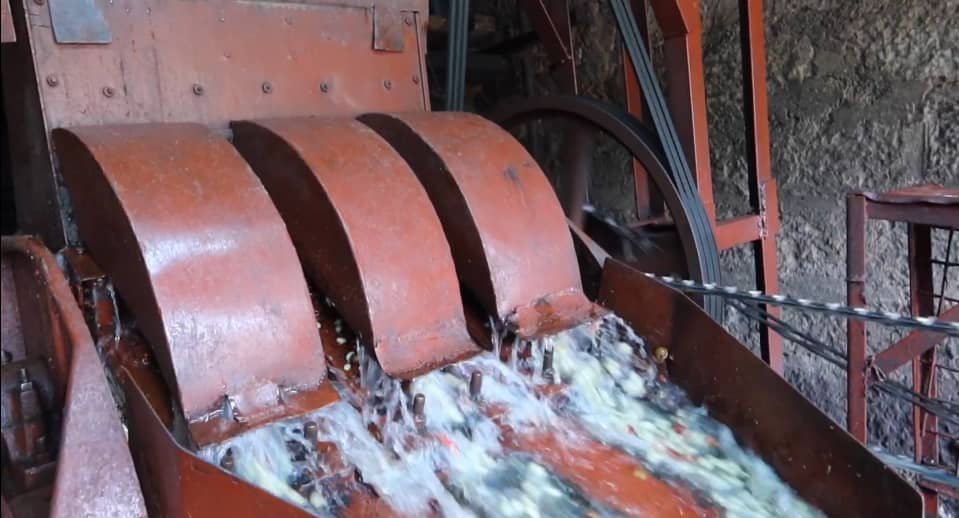
Pulping: Removing the Outer Layer
he sorted cherries are sent through a pulping machine that gently removes the outer skin and some of the fruit pulp, revealing the coffee beans inside. This critical step must be done with precision to avoid damaging the beans, as the pulp removal affects the final flavor and quality of the coffee.
03
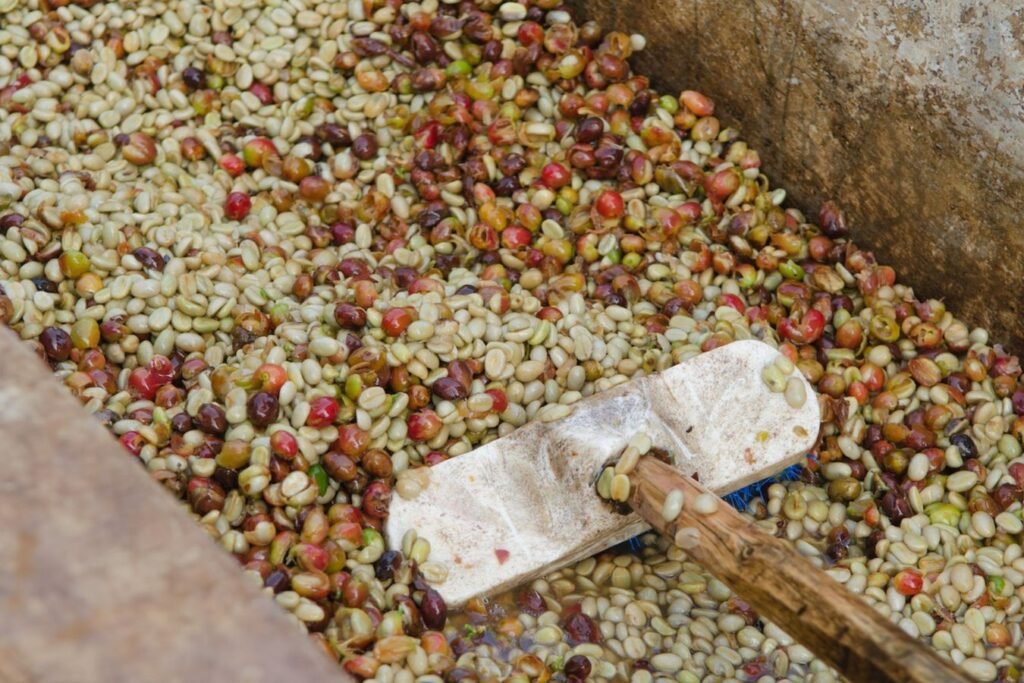
Fermentation
Once pulped, the beans are covered in a sticky layer called mucilage. To break this down and enhance the beans’ flavor profile, we place them in fermentation tanks for 12 to 48 hours. This fermentation process is carefully timed, as it’s a delicate balance—too much fermentation can negatively affect the flavor, while the right amount intensifies the natural sweetness and complexity that Ethiopian coffee is prized for.
04
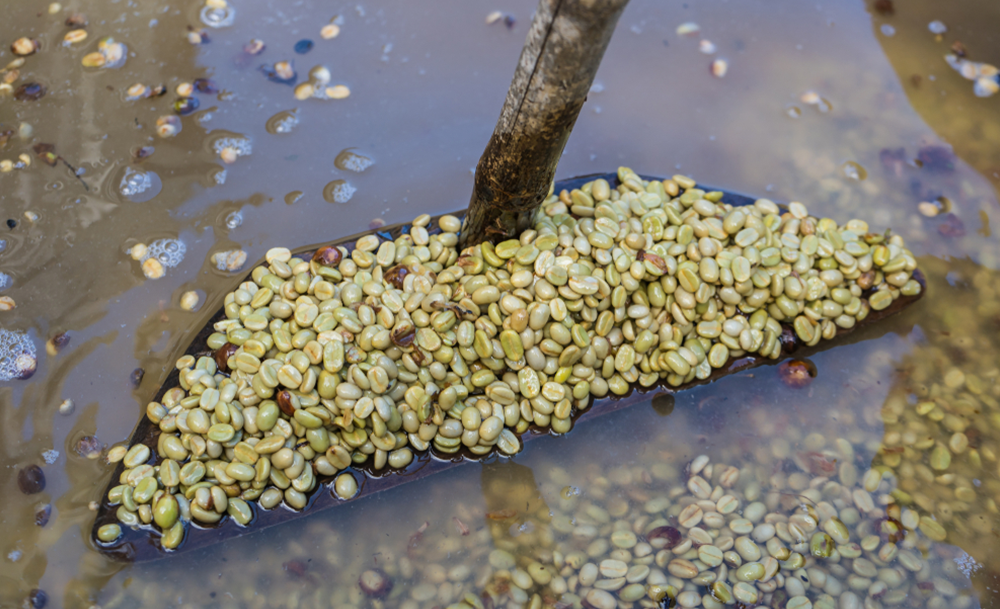
Washing: Ensuring Clean, Bright Beans
Following fermentation, the beans are thoroughly washed in clean water to remove any remaining mucilage. Washing not only prepares the beans for drying but also helps refine the flavor. At Trakem, we use traditional washing stations and advanced water channels to guarantee cleanliness, ensuring the natural brightness of the beans is preserved.
05
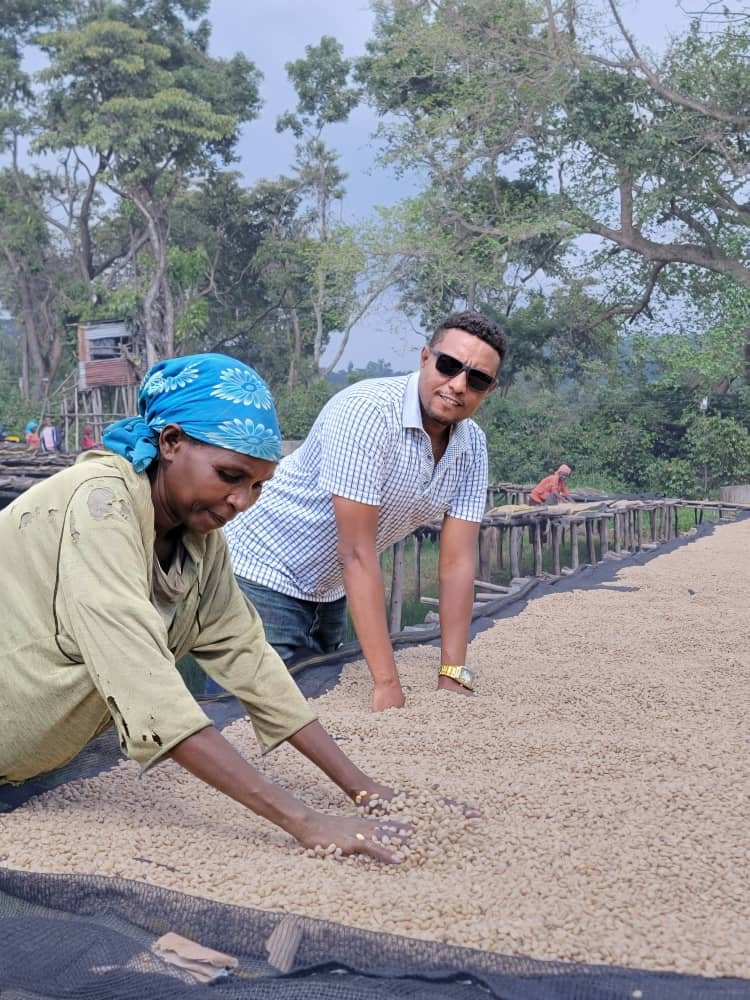
Drying: Preserving Quality
After washing, the beans are laid out to dry. This is a critical step in stabilizing the coffee’s moisture content, which is reduced to around 10-12%. We use sun-drying methods, spreading the beans on raised beds or patios, as well as mechanical dryers when necessary. Proper drying prevents mold and maintains the beans’ full flavor potential, ensuring they’re ready for the next stage.
06
Hulling: Removing the Parchment Layer
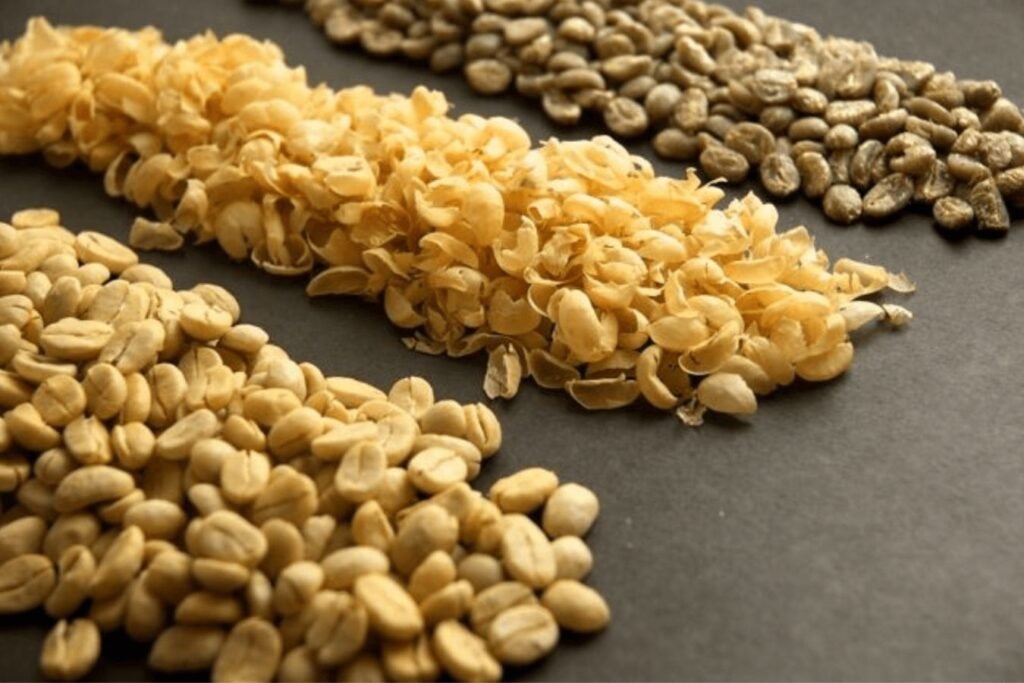
Once the beans are fully dried, they still need to have the parchment layer (a thin, papery husk) removed. Hulling machines in a dry mill are used for this process. This step reveals the green coffee beans inside, which are now ready for export. At Trakem, we ensure this process is done carefully to avoid damaging the beans, maintaining their quality
07
Grading and Sorting: Guaranteeing Premium Quality
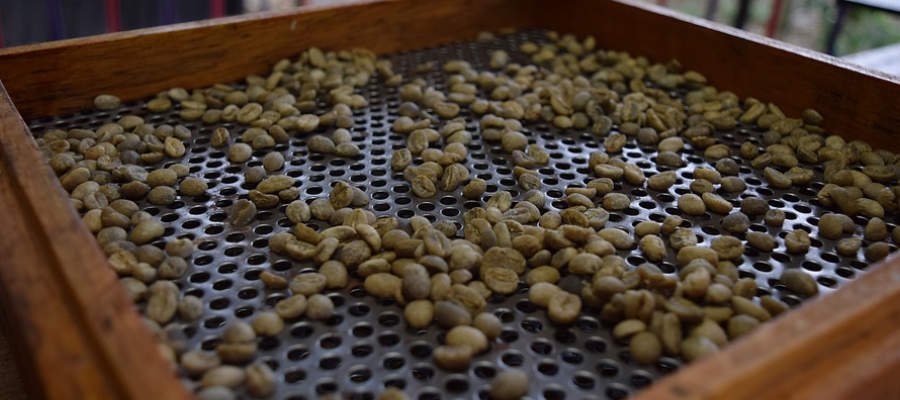
Before packaging, the beans undergo rigorous grading and sorting to ensure that only the highest quality beans are prepared for export. At Trakem, we grade beans based on size, weight, and color, using both advanced machinery and manual inspection. Defective beans are removed, and only those that meet our strict quality standards are approved for shipping.